
Kidney Health, Menopause, and Metabolic Risk in Women

Midlife is when years of silent kidney stress from blood pressure, blood sugar swings, and hormonal shifts finally start to show up—and the choices you make now can dramatically shape your kidney health for decades to come.
What is Chronic kidney disease (CKD)?
Chronic kidney disease (CKD) affects roughly one in ten Canadians and often develops slowly and quietly. The conditions that drive it—high blood pressure, type 2 diabetes, abdominal weight gain, autoimmune issues, and elevated cholesterol—tend to accelerate after menopause. Yet most conventional testing only flags problems once kidney damage is already well underway. That’s why kidney health now sits alongside heart and metabolic markers in the newer “CKM” (cardiovascular–kidney–metabolic) risk frameworks.
The good news: small, consistent changes in midlife really do matter. You can meaningfully protect your kidneys by:
Keeping blood pressure in the optimal range (ideally under 120/80)
Preventing or tightly managing diabetes and prediabetes
Quitting smoking
Maintaining a healthy weight and building/maintaining muscle
Moving your body daily
Hydrating well (aim for about 8–10 cups of water daily, more if you sweat a lot)
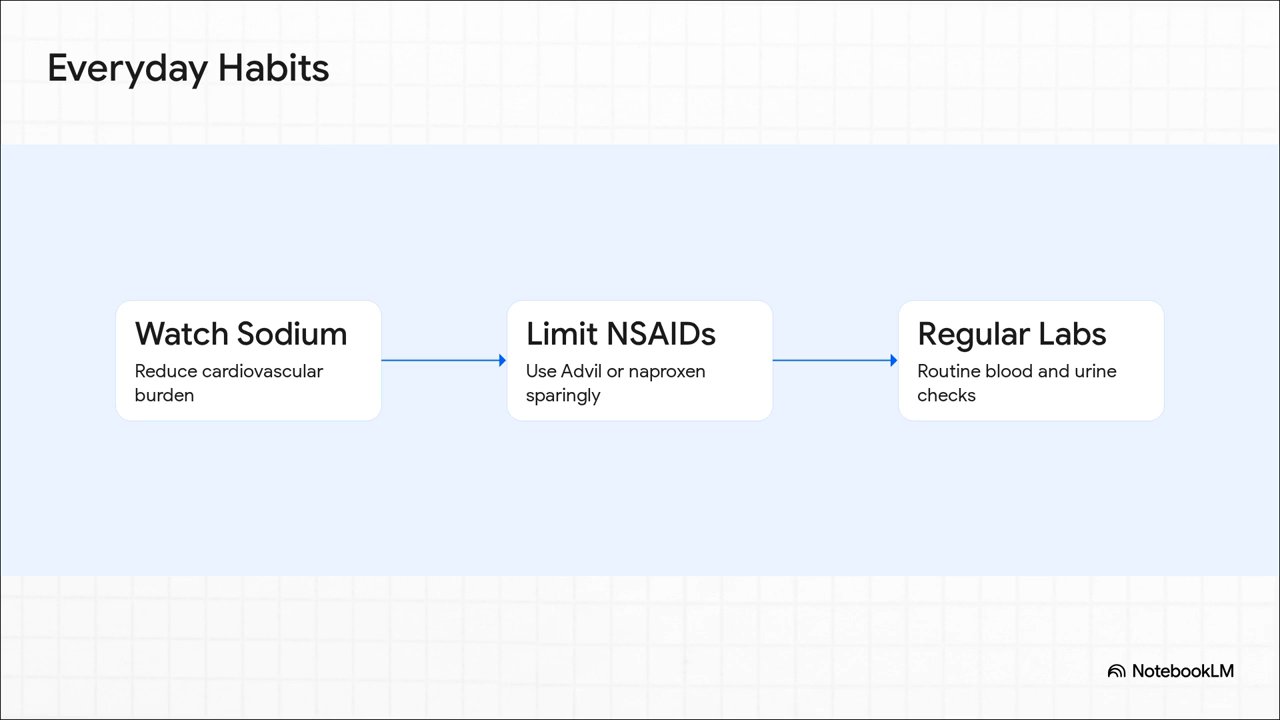
Being mindful of sodium/salt intake
Limiting use of NSAIDs (Advil, Motrin, naproxen, etc.) only when necessary
Getting regular lab checks (creatinine/eGFR, urine albumin, and related markers)
Simple blood and urine tests, combined with regular follow‑ups, can detect kidney stress years before it progresses to advanced CKD.
What is the Klinrisk Score and how is it used for understanding chronic kidney disease progression ?
The Klinrisk Score is an AI‑driven risk tool that goes beyond standard kidney tests. It uses routine blood and urine results to generate a personalized risk score that helps identify who is more likely to experience kidney disease progression or develop CKD in the future. This gives us a chance to act earlier and more strategically by allowing you and your primary care provider to see a more complete picture of your kidney health and future risk.
In Ontario, LifeLabs offers patients the Klinrisk score. It can be requisitioned by their Naturopathic doctor, Family Doctor or Nurse practitioner.
Klinrisk is already recognized by Diabetes Canada’s 2025 guidelines as a valuable tool for CKD risk stratification, particularly in people living with diabetes. It can help change disease trajectory by providing actionable insights to guide treatment and prevention decisions.
Eligibility and logistics for the Klinrisk Panel:
You must be 18 years or older
You must not be fasting – please eat within 2 hours before your lab visit (at least 30 minutes prior)
You must be able to provide both blood and urine samples at the same visit
Klinrisk reference ranges and associated risk of disease progression:
Low Risk Score: 0 to 5 % risk over 5 years
Medium Risk Score: 6 to 24 % risk over 5 years
High Risk Score: 25+ % risk over 5 years
In addition, for diagnosis and staging in CKD – eGFR and albuminuria are also essential and should be part of screening and ongoing management. The Klinrisk test provides prognostic information beyond eGFR and albuminuria, and identifies patients who are risk of progression.
Please note the Klinrisk score is not to be confused with Kidney Failure Risk Equation (KFRE). KFRE is a freely available equation based on 4 lab tests used to determine kidney failure risk at later stages of kidney disease progression.
The following 16 tests are used to calculate your score via an AI algorithm:
Hematology
CBC
Blood chemistry
Random Glucose
Bilirubin
Creatinine (eGFR)
Albumin
Urea (BUN)
Calcium
Sodium
Magnesium
Potassium
Chloride
ALT Phosphate
Alk Phosphatase
Carbon Dioxide (Bicarbonate)
Urine chemistry
Albumin/Creatinine Ratio
Final thoughts
If you’re in midlife and want to be proactive about protecting your kidneys, this is an excellent time to get a deeper, more preventive perspective. Simple labs and regular followups with your primary care provider can catch kidney stress years before it turns into chronic kidney disease.
To your best health,
Dr. Amy Tung, ND, MSCP
Naturopathic Doctor | Menopause Society Certified Practitioner
References
1. Kidney foundation website: https://kidney.ca/
2. Klinrisk website: www.klinrisk.com
3. Ferguson T, Ravani P, et al. Development and External
Validation of Machine Learning Model for Progression of CKD.
Kidney Int Reports 2022;7:1772-1781
4. Kidney Failure Risk Equation (KFRE) | ORN (ontariorenalnetwork.
ca) https://www.ontariorenalnetwork.ca/en/kidney-careresources/clinical-tools/primary-care/kfre
Interested in learning more about working with me?
Book a free discovery call virtually (Ontario residents only).
