
What Is Hypoactive Sexual Desire Disorder (HSDD) and How Can It Be Treated?

Loss of libido and desire is a common but often under-discussed concern among women in the postmenopausal years. For some, it’s a temporary dip. For others, it’s more persistent — affecting their relationships, confidence, and overall well-being. When low sexual desire becomes distressing and persistent, it is diagnosed as Hypoactive Sexual Desire Disorder (HSDD).
Let's explore what HSDD is, why it happens in the postmenopausal years, and what evidence-based treatments are available — both conventional and natural. Let's also discuss lifestyle and psychological strategies that can support sexual health and satisfaction at this stage of life.
Understanding HSDD: It’s More Than “Just Hormones”
Hypoactive Sexual Desire Disorder (HSDD) is defined as a chronic lack of sexual thoughts or interest that causes personal distress or difficulties in relationships. It’s one of the most common types of female sexual dysfunction, especially in postmenopausal women.
“HSDD is characterized by a deficiency or absence of sexual fantasies and desire for sexual activity, which causes marked distress or interpersonal difficulty.” (Diagnostic and Statistical Manual of Mental Disorders, DSM-5)
It’s important to distinguish between low libido that feels normal for you versus a drop that causes frustration, sadness, or tension in your relationship. If it’s the latter, you’re not alone — and support is available.
Diagnosing HSDD: When Should You Seek Help?
You might consider discussing HSDD with your healthcare provider if you are postmenopausal and you answer yes to any of these questions:
- You have little or no interest in sex for at least six months
- The lack of desire causes personal or relationship distress
- There is no medical or mental health condition fully explaining the change
- HSDD is a diagnosis of exclusion. Your doctor may review medications, rule out depression or thyroid dysfunction, and explore relationship dynamics before confirming the diagnosis.
How Common Is HSDD in Postmenopausal Women?
Research suggests that up to 30% of women experience low sexual desire, and around 10% meet the criteria for HSDD.
After menopause, the risk increases due to changes in hormone levels, especially estrogen and testosterone.
“Estrogen and androgen deficiencies following menopause contribute significantly to changes in sexual function, including decreased desire.” (Kingsberg et al., 2019)
However, hormones aren’t the only factor. Emotional health, relationship quality, physical health conditions, medications, and even cultural attitudes toward aging and sexuality can all play a role.
The Role of Hormones in Sexual Desire
Estrogen
- After menopause, estrogen levels decline sharply. This drop contributes to:
- Vaginal dryness and thinning (vaginal atrophy)
- Painful intercourse (dyspareunia)
- Reduced blood flow and sensation in genital tissues
These physical changes can make sexual activity uncomfortable, leading to a natural avoidance of intimacy — which can then affect desire.
Testosterone
While often thought of as a male hormone, testosterone plays a key role in female sexual desire as well. Women produce testosterone in smaller amounts, and levels gradually decline with age. For postmenopausal women, levels may dip further. It can also decrease especially rapidly in women who have had both of their ovaries removed.
“Androgens, particularly testosterone, are key regulators of libido in women and may be involved in the pathophysiology of HSDD.” (Clayton & Kingsberg, 2021)
Conventional Treatments for HSDD
Treatment often depends on whether the cause is physical, psychological, hormonal, or a mix of factors. For many women, a combined approach works best.
1. Hormone Therapy
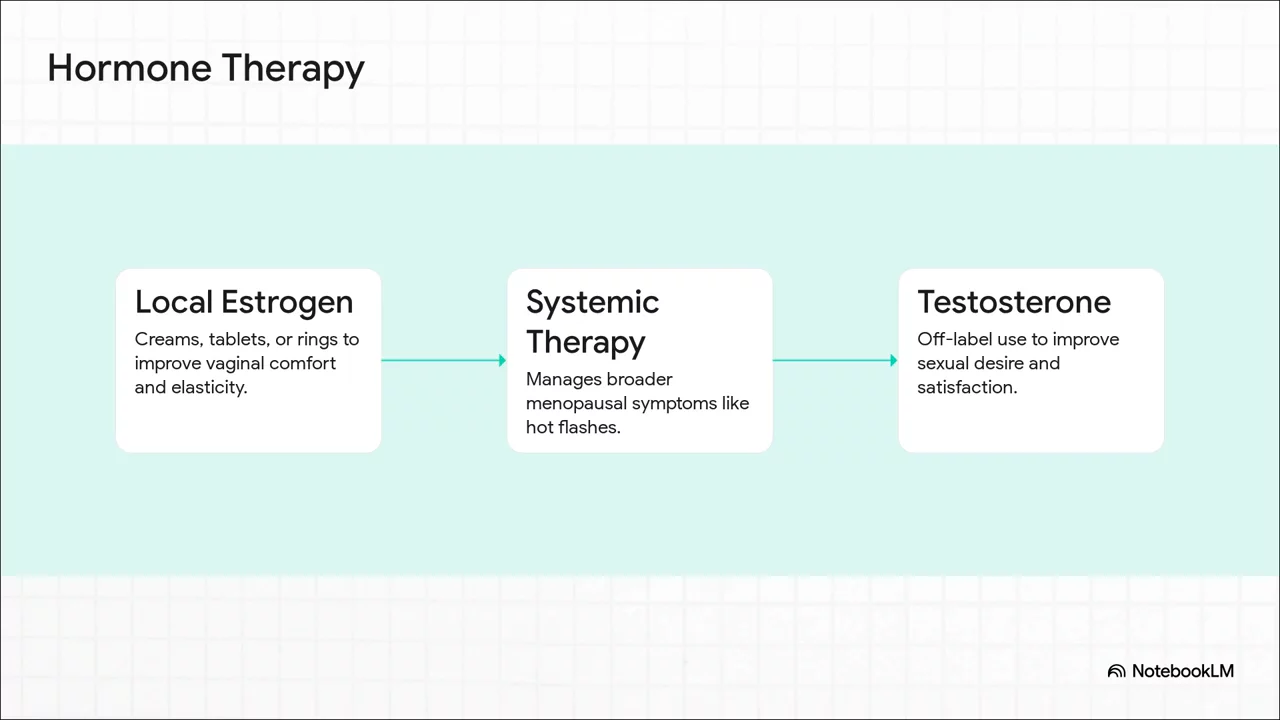
Hormone therapy may help address the physiological changes that contribute to HSDD:
- Local estrogen (vaginal tablets, rings, or creams): Improves vaginal dryness and elasticity, making sex more comfortable.
- Systemic hormone therapy (oral or transdermal): May be prescribed to manage broader menopausal symptoms such as hot flashes and night sweats or sleep changes, though it is not indicated specifically for desire.
- Testosterone therapy: Low-dose transdermal testosterone has been studied for postmenopausal women with HSDD. It is still considered "off label" prescribing. It needs to be prescribed by your medical doctor or nurse practitioner in Ontario.
“Transdermal testosterone has demonstrated benefit in improving sexual desire and satisfaction in appropriately selected postmenopausal women.” (North American Menopause Society, 2022)
Important note: Testosterone therapy is not approved for women in many countries, including Canada. If prescribed "off-label", it should be done under the guidance of a healthcare provider experienced in hormone management, with appropriate monitoring of levels and side effects. Ensure that you speak to a primary care provider who is familiar with prescribing testosterone for women.
2. FDA and Health Canada Approved Medications
There are two prescription medications approved for HSDD in premenopausal women, and one has emerging data for use:
Flibanserin (Addyi): A daily oral medication used in premenopausal women taken at bedtime to reduce the side effects of dizziness and fatigue. Originally developed as an antidepressant, this daily pill affects serotonin and dopamine in the brain. It has modest benefits but is not approved in postmenopausal women.
Bremelanotide (Vyleesi): A subcutaneous self-injectable used 45 minutes prior to sexual activity. It can be used no more then once daily. Its effectiveness in postmenopausal women is still being studied.
These medications can be options in certain cases but are not first-line for postmenopausal women.
Naturopathic and Lifestyle Strategies for Low Desire
For many women, a natural or integrative approach can be highly effective — particularly when physical discomfort, mood, or stress play a role.
1. Pelvic Floor Physiotherapy
A pelvic floor physiotherapist who specializes in pelvic health can help reduce pain with intercourse and increase comfort. Pelvic floor dysfunction is more common after menopause and childbirth, and resolving muscle tension or weakness may restore confidence and comfort in intimacy. You can look for a pelvic floor physio in your area here.
2. Vaginal Moisturizers and Lubricants
Over-the-counter options for vaginal moisturizer and lubricants are a great option. I often recommend to my patients hyaluronic acid-based moisturizers (used regularly for maintenance and prevention of dryness) and water-based lubricants (used during intimacy) can reduce pain and improve sensation. Look for fragrance-free, paraben-free products.
“Vaginal moisturizers improve vaginal hydration and elasticity and may enhance sexual function in postmenopausal women.” (Parish et al., 2019)
3. Adaptogens and Herbal Support
Some plant-based therapies show potential in supporting mood, energy, and sexual desire:
- Maca root: May help improve libido and energy levels
- Tribulus terrestris: May support androgen levels and desire
- Ashwagandha: Traditionally used for stress and sexual vitality
- Ginkgo biloba: Can improve blood flow and microcirculation (contraindicated if you are any type of blood thinners such as warfarin)
Always consult with a licensed naturopathic doctor before starting herbs, especially if you take other medications.
4. Mindfulness and Psychotherapy
Sexual desire isn’t just about hormones — it’s about feeling connected, confident, and relaxed.
Mindfulness-based cognitive therapy (MBCT) and sex therapy can help women reconnect with their body and desires, especially after years of discomfort, trauma, or stress.
“Mindfulness training has shown significant improvements in sexual desire, arousal, and satisfaction in women with sexual dysfunction.” (Brotto et al., 2012)
Supporting Desire Through Whole-Person Care
Your sexual health after menopause matters — and it deserves the same care and attention as any other aspect of your well-being.
Many women benefit from a combination of:
- Hormonal support (if appropriate)
- Vaginal moisturizers or local estrogen
- Herbal and nutritional therapies
- Pelvic floor physiotherapy
- Therapy or mindfulness-based strategies
A personalized plan can address the root causes of your concerns, not just the symptoms.
When to Ask for Help
If HSDD is affecting your quality of life, you don’t have to accept it as your “new normal.” There are effective, evidence-based ways to restore comfort, confidence, and connection. A naturopathic or integrative approach can help you explore both hormonal and non-hormonal strategies in a supportive, holistic way.
I offer free discovery calls for women navigating life after menopause — and I’d love to support you in feeling more like yourself again. You can book here.
To your best health,
Dr. Amy Tung, ND
Naturopathic Doctor | Menopause Society Certified Practitioner
References:
Brotto, L. A., Basson, R., & Luria, M. (2008). A mindfulness-based group psychoeducational intervention targeting sexual arousal disorder in women. Journal of Sexual Medicine, 5(7), 1646–1659.
Clayton, A. H., & Kingsberg, S. A. (2021). Testosterone and Female Sexual Dysfunction. Obstetrics and Gynecology Clinics, 48(4), 777–794.
Kingsberg, S. A., Clayton, A. H., & Goldstein, I. (2019). Hypoactive Sexual Desire Disorder in Women: Unmet Needs and Therapeutic Options. Sexual Medicine Reviews, 7(4), 515–528.
Parish, S. J., Simon, J. A., Davis, S. R., et al. (2019). The role of nonhormonal vaginal moisturizers and lubricants in postmenopausal women with vulvovaginal atrophy. Climacteric, 22(3), 228–235.
North American Menopause Society (NAMS). (2022). Position Statement on the use of testosterone therapy in women.
Smith, T., & Batur, (2021) P. Prescribing testosterone and DHEA: The role of androgens in women
Cleveland Clinic Journal of Medicine, 88 (1) 35-43; DOI: 10.3949/ccjm.88a.20030https://www.ccjm.org/content/88/1/35#sec-15