
Understanding Obesity Beyond BMI: Why Muscle Mass and Belly Fat Matter in Perimenopause
If you’re in your late 30’s, 40’s, or 50’s and you’ve noticed that weight seems to “stick” differently than it used to, you’re not imagining things. Many women experience body composition changes during perimenopause and menopause, including an increase in abdominal fat. These shifts are influenced by hormonal changes, lifestyle, and aging. While obesity is often defined by BMI, the full picture is more complex—especially when it comes to visceral fat (belly fat) and muscle mass.
What Is Obesity?
Obesity is most commonly defined by Body Mass Index (BMI), which is your weight in kilograms divided by the square of your height in meters (kg/m²). According to the World Health Organization, a BMI of 30 or higher is considered "obese".
But, BMI has its limitations:
It doesn’t differentiate between fat mass and muscle mass. So for example, a woman with higher muscle mass may have a “high” BMI but low body fat. Conversely, someone with “normal” BMI could still carry excess visceral fat, putting them at risk for health issues.
“BMI is a useful population-level tool, but it does not account for fat distribution or lean body mass.” (Nuttall, 2015)
Why Belly Fat Matters More Than the Scale
Not all fat is the same. Subcutaneous fat (the fat under your skin) is less harmful compared to visceral fat (fat stored deep around your abdominal organs).
Visceral fat is especially important during perimenopause and menopause because estrogen plays a protective role in fat distribution. As estrogen levels decline, fat tends to shift toward the abdomen.
Excess visceral fat is strongly linked to:
- Insulin resistance and type 2 diabetes
- High blood pressure and cardiovascular disease
- Inflammation that can impact everything from joint pain to cognitive health
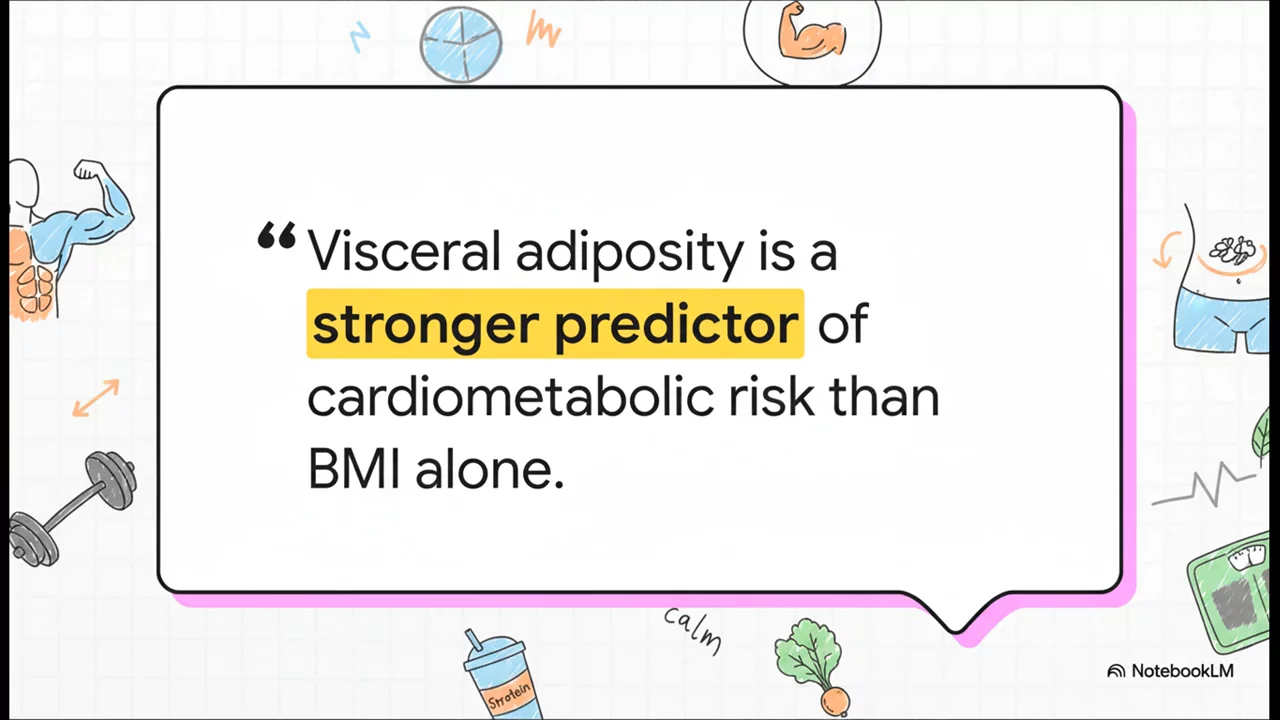
“Visceral adiposity is a stronger predictor of cardiometabolic risk than BMI alone.” (Fox et al., 2007)
Muscle Mass: The Other Side of the Equation
Just as important as monitoring fat is maintaining muscle. During perimenopause and menopause, women naturally lose muscle mass (sarcopenia), which lowers metabolism and makes it easier to gain fat—even if eating habits haven’t changed.
Lower muscle mass contributes to:
- Slower metabolism and reduced calorie burn
- Higher risk of falls and fractures
- Decreased insulin sensitivity
“Loss of skeletal muscle during midlife increases the risk of metabolic syndrome and functional decline.” (Zamboni et al., 2014)
This is why weight training and protein intake are so valuable during this stage of life—they help preserve lean body mass and support long-term health.
How Obesity Is Evaluated in Perimenopause and Menopause
Instead of relying on BMI alone, a more comprehensive approach includes:
Waist and Hip circumference and waist to hip ratio (WHR):
A waist measurement > 35 inches (88 cm) in women is associated with higher visceral fat and metabolic risk.
Body composition scans:
Tools like DEXA or bioelectrical impedance analysis (BIA) can estimate fat vs. muscle.
Lab work:
Fasting blood glucose (FBG), fasting insulin, cholesterol panel (includes triglycerides, HDL, LDL, non-HDL), Apolipoprotein B, Lipoprotein (a), liver function tests, Vitamin D status, Complete blood count (CBC) and inflammatory markers (hs-CRP, ferritin, transferrin) provide insight into metabolic health.
What You Can Do to Optimize Your Muscle
If you’re concerned about weight gain or changes in body shape during perimenopause, here are some strategies that go beyond the scale:
Prioritize Protein and Strength Training
Eating adequate protein (around 1.2–1.7 g per kg of body weight daily this varies depending on activity level and exercise) and lifting weights 2–3 times per week helps maintain muscle mass.
Support Metabolic Health
Focus on fibre-rich foods, steady movement throughout the day, and limiting processed sugar to keep blood sugar stable. Avoid deep fried or ultra processed foods or sugary drinks or beverages.
Track Waist, Not Just Weight
Measuring your waist circumference can give you a clearer picture of risk than BMI alone. Aim for a waist circumference for women under 35 inches and under 40 inches for men.
Sleep and Stress Management
Poor sleep and high stress elevate cortisol, which promotes abdominal/visceral fat storage. Get your sleep checked if you are having issues. Make sure you rule out obstructive sleep apnea (OSA). If you are waking with vasomotor symptoms like night sweats or having disruptive hot flashes in the day talk to your primary care provider about Hormone Replacement Therapy (HRT) if it is a good option for you.
Ask for Professional Support
A healthcare provider can help assess visceral fat, metabolic health, and provide personalized strategies.
The bottom line when it comes to obesity in perimenopause and menopause
Obesity in perimenopause and menopause is not just about weight—it’s about where fat is stored, how much muscle you maintain, and how those factors affect long-term health. BMI is a starting point, but it doesn’t tell the whole story.
By focusing on muscle preservation, reducing visceral fat, and supporting metabolic health, you can navigate these years feeling stronger and healthier.
Don’t be discouraged if the number on the scale looks different than it used to—what matters most is body composition, energy, and reducing health risks.
If you would like to book a free discovery call book here.
To your best health,
Dr. Amy Tung, ND
Naturopathic Doctor | Menopause Society Certified Practitioner
References
Nuttall, F. Q. (2015). Body mass index: Obesity, BMI, and health: A critical review. Nutrition Today, 50(3), 117–128.
Fox, C. S., et al. (2007). Abdominal visceral and subcutaneous adipose tissue compartments: Association with metabolic risk factors in the Framingham Heart Study. Circulation, 116(1), 39–48.
Zamboni, M., et al. (2014). Sarcopenia, cachexia and congestive heart failure in the elderly. Endocrine, Metabolic & Immune Disorders - Drug Targets, 14(1), 58–67.
Disclaimer:
The information in this blog is for educational and informational purposes only. It is not intended to be a substitute for professional medical advice, diagnosis, or treatment. Always seek the guidance of your doctor or other qualified health professional with any questions regarding a medical condition or treatment. Never disregard professional medical advice or delay seeking treatment because of something you have read in this blog.
Individual results may vary, and the strategies discussed here are not guaranteed to work for everyone. This content does not create a patient-client relationship and should not be used as a replacement for personalized medical care.
Interested in learning more about working with me?
Book a free discovery call virtually (Ontario residents only).
