
Hormone Blood Tests for Women: Understanding Estradiol, Progesterone and Testosterone Ranges
Steroid hormones such as estrogen, progesterone, testosterone, DHEA, cortisol, aldosterone, and vitamin D are all produced from cholesterol and exert powerful effects even at very low concentrations.
These hormones help regulate energy, metabolism, blood pressure, stress response, bone health, and reproductive function, so small imbalances can have a noticeable impact on how you feel day to day.
“Steroid hormones regulate diverse physiological functions such as reproduction, blood salt balance, maintenance of secondary sexual characteristics, response to stress, neuronal function and various metabolic processes.” (Hu, et al., 2010)
Hormone Physiology and Expected Ranges (SI Units)
When interpreting hormone laboratories in cycling women, it is essential to use SI units (pmol/L, nmol/L) and to consider menstrual cycle timing, because estradiol, progesterone, and androgens (such as DHEA and testosterone) change predictably across the month. Results should always be read in the context of the lab’s own reference intervals and the symptoms rather than numbers alone.
Estradiol (E2) in Cycling and Postmenopausal Women
Estradiol is the dominant estrogen before menopause and is produced mainly by ovarian granulosa cells. Levels are lowest early in the cycle, rise to a pre‑ovulatory peak, then remain moderate through the luteal phase to support the endometrium.
Typical serum reference intervals in SI units are:
Follicular phase (approx. days 1–14): about 70–500 pmol/L
Around ovulation: roughly 200–1,300 pmol/L
Luteal phase (approx. days 14–28): about 200–800 pmol/L
Postmenopausal range (after 12 months of no period): generally under 100–180 pmol/L, and often <40 pmol/L
In the menopausal transition (the decade prior to a woman's final menstrual period), there is wide fluctuations in estradiol as well as progesterone.
Testing estradiol during the perimenopausal years is not helpful as levels can vary within a day and do not correspond with a woman's symptoms often. That is why it is not always helpful to test estradiol levels during this time.
In the postmenopausal phase, estradiol levels are consistently low and do not fluctuate with a cycle, which is one reason vasomotor symptoms, sleep disturbance, and bone loss become more common.
Progesterone in the Luteal Phase (nmol/L)
Progesterone rises only after ovulation, when the corpus luteum forms, and remains low in the follicular phase and after menopause.
For cycling women, serum progesterone is most informative in the mid‑luteal window (about 5–7 days after ovulation, or ~day 21 of a classic 28‑day cycle). Common reference intervals include:
Follicular phase: typically <3–4 nmol/L.
Mid‑luteal phase: often ~16–64 nmol/L (5–20 ng/mL)
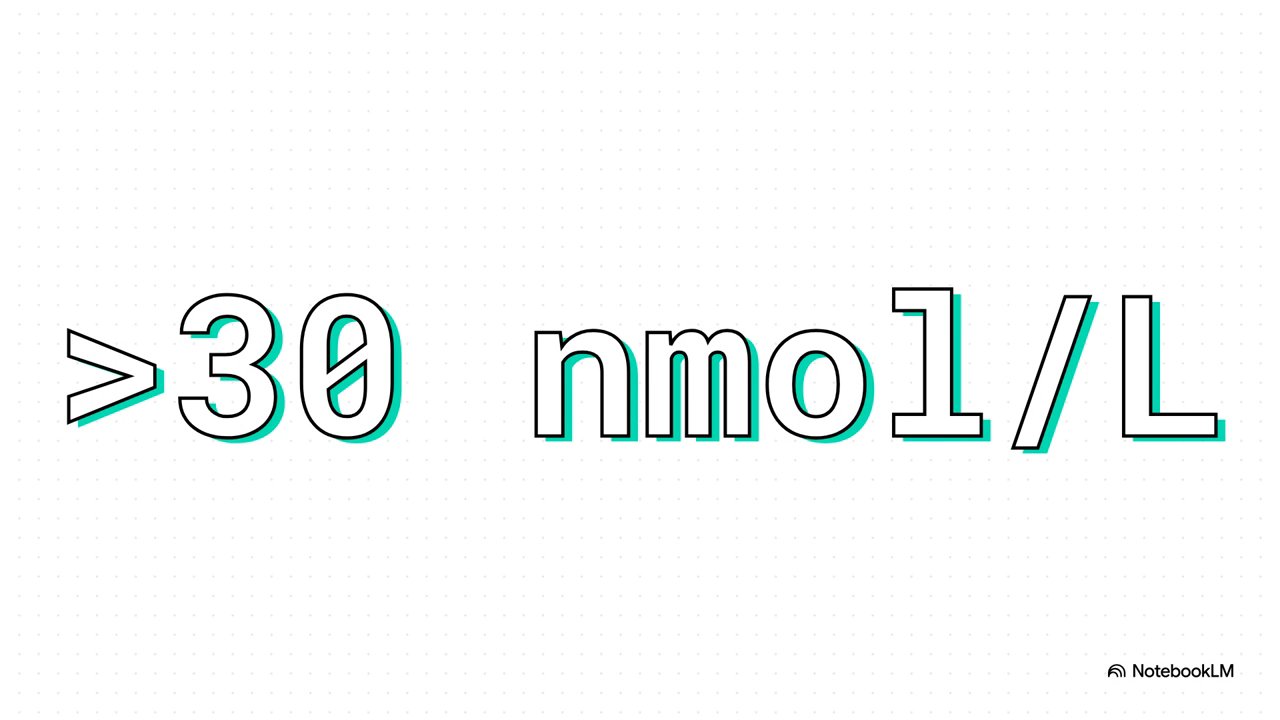
Values above about 30 nmol/L, when timed 6-7 days after ovulation, generally support that ovulation has occurred and that luteal function is adequate.
Because timing is critical, a “low” progesterone result drawn too early or too late may still be normal; repeating at the correct luteal time point is often necessary.
Progesterone testing is helpful for women who are trying to conceive and want to know whether or not they ovulated in that particular cycle. It can help with knowing when to have intercourse and when to optimize one's fertility window.
Progesterone testing is not typical helpful in women in the menopausal transition or postmenopausal because the levels will almost always be low.
This is due to the presence of LOOP cycles as well as anovulatory cycles (a period with no ovulation) during the perimenopausal years.
Once a woman is in menopause (no period for 12 months) she does not ovulate so progesterone levels will always be low (unless she is on hormone replacement therapy (HRT), and it is not always helpful to test levels as treatment does not change depending on testing).
Androgens in Women: Testosterone (nmol/L)
Women produce smaller amounts of androgens from the ovaries, adrenal glands, and peripheral conversion of precursors such as androstenedione.
In Canadian and European laboratories, total testosterone is typically reported in nmol/L, with common female adult reference intervals of about 0.5–2.5 nmol/L.
Testosterone follows a modest diurnal rhythm, with higher values in the morning and a decline over the day, so most guidelines recommend testing as close to 7 am morning (often before 11am) for the most consistent results.
Interpretation should always integrate both the number and the clinical picture—low libido, fatigue, and low muscle mass at the low end versus acne, hirsutism, or cycle disruption at higher levels.
Polycystic Ovarian Syndrome (PCOS)
Elevated levels of androgens such as DHEA and testosterone represent often a higher degree of Polycystic Ovarian Syndrome (PCOS). It is taken in consideration of the patients clinical picture however as a single test does not give us a diagnosis.
For PCOS we would look at androgen symptoms such as acne, hair loss, hirsuitism and changes int he woman's cycle which could indicate anovulation. A transvaginal ultrasound may also be indicated in these women to rule out cysts on the ovaries.
Limitations of Steroid Hormone Testing
Steroid hormone testing is powerful but imperfect, particularly at the low concentrations seen in women when it comes to tests such as testosterone. Many routine assays are immunoassays, which can show cross‑reactivity with similar steroid molecules and produce falsely high or low values for estradiol, progesterone, testosterone, and others. Studies comparing immunoassays with liquid chromatography–mass spectrometry (LC‑MS/MS) demonstrate significant analytical bias between methods, especially at low levels.
Biological and pre‑analytical factors also matter, because steroid levels fluctuate across the day, across the menstrual cycle, and with stress, illness, medications, and lifestyle factors, so a single blood draw may not reflect a person’s usual hormonal pattern.
"Can I have my hormones tested?"
This is important to know as many women will ask their primary care providers;
"Can I have my hormone tested?"
I always say that, "It depends what we are aiming to achieve by testing and the information if it will change the treatment."
What to test and when to test depends on the individual patient.
Serum testing is not always helpful and does not always give us more information when it comes to estradiol and progesterone. There are other tests such as urine hormone testing which is not routinely recommended.
Serum testing is helpful and is the standard of care for thyroid testing for example such as Thyroid stimulating hormone (TSH), free T3, free T4, thyroid antibodies (anti-TPO, anti-thyroglobulin).
Recommendations for testing vary by the individual and depend on the concerns of the patient. Always speak to your primary care provider to discuss testing that is specific to your needs. I do have a free hormone guide that can be a helpful starting point for many patients. You can download it here.
To your best health,
Dr. Amy Tung, ND
Naturopathic Doctor | Menopause Society Certified Practitioner
References
Hu J, Zhang Z, Shen WJ, Azhar S. Cellular cholesterol delivery, intracellular processing and utilization for biosynthesis of steroid hormones. Nutr Metab (Lond). 2010 Jun 1;7:47. doi: 10.1186/1743-7075-7-47. PMID: 20515451; PMCID: PMC2890697.
Stern J, Arslan RC, Penke L. Stability and validity of steroid hormones in hair and saliva across two ovulatory cycles. Compr Psychoneuroendocrinol. 2022 Jan 11;9:100114. doi: 10.1016/j.cpnec.2022.100114. PMID: 35755924; PMCID: PMC9216405.
Disclaimer:
The information in this blog is for educational and informational purposes only. It is not intended to be a substitute for professional medical advice, diagnosis, or treatment. Always seek the guidance of your doctor or other qualified health professional with any questions regarding a medical condition or treatment. Never disregard professional medical advice or delay seeking treatment because of something you have read in this blog.
Individual results may vary, and the strategies discussed here are not guaranteed to work for everyone. This content does not create a patient-client relationship and should not be used as a replacement for personalized medical care.
Interested in learning more about working with me?
Book a free discovery call virtually (Ontario residents only).
